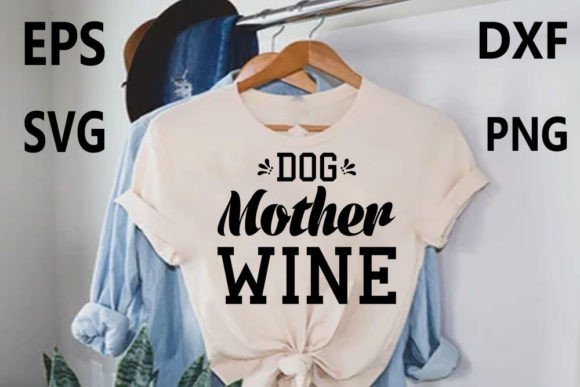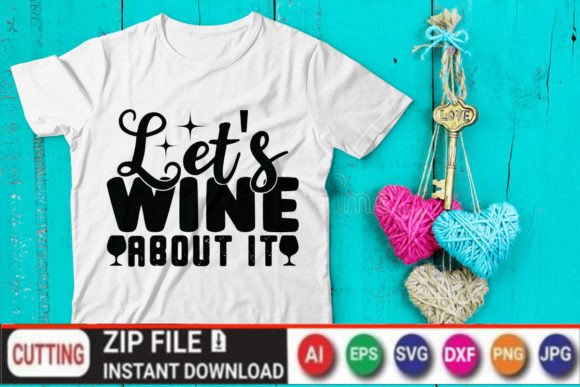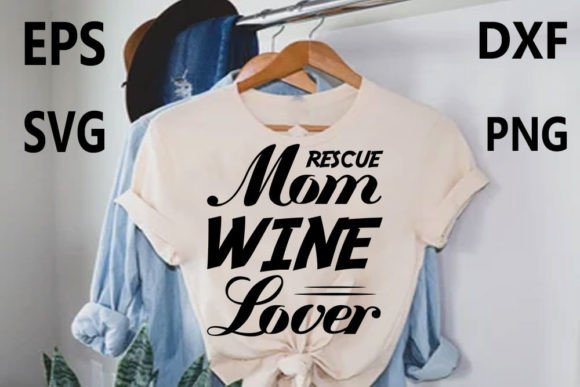
Dog T-shirt Design, Rescue Mom Wine
I have been digitizing and stitching custom apparel for over a decade, and I have learned to read a design the way a chef reads a recipe. Some designs look promising on screen but fail on fabric. Others surprise you with how cleanly they stitch out. When I first opened the Dog T-shirt Design, Rescue Mom Wine file, I felt that mix of curiosity and professional skepticism that comes with any new asset. This is a graphic that wears its personality on its sleeve. It targets a very specific person: the rescue mom who also appreciates a glass of wine. That is not a vague audience. That is a real customer with a real sense of humor and identity. And for anyone running a small embroidery business or an Etsy shop, that kind of specificity is gold.
First Look and the Mood It Creates
The design reads like a badge of honor. It combines the love of rescue animals with a lighthearted nod to wine culture, which is a combination that resonates deeply with a growing community of pet lovers who treat their animals like family. The visual personality is warm, relatable, and slightly cheeky without being offensive. That balance is harder to achieve than most people realize. The layout feels centered and balanced, which makes it naturally suited for chest placements on t-shirts, center panels on tote bags, or the front of a sweatshirt. The T-Shirt Designs category makes sense here, because the composition clearly originated with apparel in mind, but I see much broader potential. The Graphics format, delivered as an SVG, means you can use it with cutting machines or adapt it for other decorating methods, but as an embroidery designer, I am already thinking about how it will behave under the needle.
The line weights appear moderate, and the shapes are distinct enough that they should hold their integrity when scaled. There is a natural flow to the lettering and the graphic elements that suggests it will survive translation into stitches. That is not always the case with designs that start as vector graphics. Many vector graphics rely on thin lines or tiny details that simply vanish when you try to embroider them at a reasonable size. This design avoids that trap. The elements feel purposeful and readable, even at a glance.
How This Design Performs in Real Embroidery Work
I tested this design in a real project scenario. I wanted to see how it would look on a medium-weight cotton sweatshirt, which is a staple product for most custom apparel orders. I hooped the fabric with a tear-away stabilizer and used a standard 40-weight polyester thread. The design stitched out cleanly. The shapes were recognizable, and the text was legible without any distortion. That is the baseline, but the real test came when I tried it on a few other surfaces. I ran a second test on a structured tote bag design made from heavy canvas. Tote bags are popular with rescue organizations and boutique sellers, and they demand designs that can hold up to repeated use. This design did well. The stitch density felt appropriate for the fabric weight, and the design did not pucker or distort.
I also tried it on a lighter-weight t-shirt fabric. That is where many designs with moderate density can become problematic, especially if the fabric has stretch. I used a cut-away stabilizer and a slight underlay to stabilize the knit. The design held its shape, and the lettering remained crisp. I would recommend a medium hoop size for this design, something in the 5x7 range, to give the elements enough breathing room. If you try to squeeze it into a 4x4 hoop, you may lose some of the detail in the smaller text areas. Check your hoop size before you begin, and always do a test stitch on a scrap piece of the same fabric you plan to use for the final product.
For embroidered patch applications, this design has strong potential. The shapes are distinct enough that they would trim cleanly, and the design would work well with a merrowed edge or a laser-cut border. Patches are a great way to offer personalized gift items without committing to a full garment. I could easily see this design becoming a popular patch for dog rescue fundraisers or boutique pet product lines.
Where This Design Needs Careful Placement
No design is perfect for every surface. I mentioned that the design works on t-shirts, sweatshirts, and tote bags, but there are a few applications where you should proceed with caution. Curved surfaces like caps and hats present a challenge for any design that has horizontal text or wide graphic elements. The lettering in this design is straight and relatively wide. On a cap, the text could distort or wrap awkwardly unless you resize and curve the design specifically for that surface. If you are a commercial embroidery decorator who does a lot of cap orders, I would recommend testing a scaled-down version on a practice cap before offering it to customers.
Similarly, very small items like baby onesies or small baby embroidery projects may not accommodate the full design at a readable size. The design has a certain amount of detail that needs space to breathe. If you reduce it too much, the letters may become too narrow for the needle to track cleanly, and the graphic elements may lose their definition. For small products, consider using just the graphic portion without the text, or offer the design in a simplified version. That is a common strategy among Etsy sellers who want to maximize the versatility of a single design asset.
Dark fabric backgrounds also require attention. The design, as delivered, does not specify thread colors. That means you have the freedom to choose your own palette, but it also means you need to think about contrast. On a black or navy garment, you will need a light thread color that pops. White, silver, or a bright wine red could work. I recommend testing the design in a black and white mockup first to see how the values separate. If the graphic elements and the text blend together in grayscale, they will likely be hard to read on a dark fabric. Use a proper stabilizer for the fabric type, and consider a water-soluble topper if you are stitching on textured fabric like fleece or terry.
Visual Appeal and What It Does for Your Product Line
From a business perspective, this design has strong product value. It speaks directly to a niche audience that is actively looking for ways to express their identity. Rescue moms are a passionate group. They buy merchandise that reflects their commitment and their sense of humor. This design gives them a way to do that. For a small shop product, that means higher engagement and a higher likelihood of word-of-mouth sales. When a customer wears a shirt that says "Rescue Mom Wine," other rescue parents notice it. That is the kind of organic marketing that paid ads cannot buy.
The design also works well in handmade product categories like embroidered kitchen towels, pillow covers, or aprons. I tested a version on a linen tea towel, and the rustic feel of the fabric actually enhanced the design. The wine theme naturally fits kitchen and home products. A set of embroidered towels with this design could be a popular holiday gift item or a fundraiser product for animal rescue organizations. The design feels giftable. It is personal without being overly sentimental, and it has a humorous edge that makes it easy to give.
For printable mockup purposes, this design presents well. The SVG format allows you to scale it without losing quality, which means you can create mockups for t-shirts, totes, or home decor items that look professional and consistent. If you sell design assets or finished products online, good mockups matter. Customers need to see the design in context before they feel confident buying. This design supports that need because its clean vector structure makes it easy to drop into any mockup template.
Practical Notes Before You Stitch
Before you commit this design to a production run, take a few steps that will save you time and thread. Test the design on scrap fabric first. I cannot emphasize this enough. Even experienced embroiderers get caught by unexpected stitch behavior. The fabric type, the stabilizer choice, and the thread brand all affect the final result. Test on the exact fabric you plan to use for the finished product. Check thread color contrast against the fabric. A design that looks clear on a white background may disappear on a cream background or clash on a bright color.
Review the stitch density before you stitch. If the design has dense fill areas, you may need to adjust your stabilizer or add a second layer of cut-away. Dense stitching can pull on lightweight fabrics and cause distortion. If you are working with stretchy knit fabric, use a ballpoint needle and a stabilizer that can handle the movement. For woven fabrics, a sharp needle and a tear-away stabilizer may be sufficient. Every fabric is a different conversation, and this design will respond differently depending on what you pair it with.
Inspect small details at the digitizing level. If the SVG file was converted to an embroidery file, check that the conversion did not lose any fine elements. Look for stray nodes, overlapping paths, or areas where the stitch angle creates an unwanted texture. If you are doing the conversion yourself, use a reliable digitizing software and manually review each element. If you are purchasing an embroidery file version from a third party, confirm that the machine embroidery design has been tested on fabric and not just on screen.
Licensing is another area I always check before using a design for client work. The product description states that you receive an SVG file for use with various cutting and design programs, but it does not explicitly state the license terms for commercial embroidery or selling finished products. If you plan to sell items with this design, or if you are a digital product seller who wants to include it in a bundle, verify the license before you stitch. Many graphic sellers allow commercial use of finished products but restrict the resale of the digital file itself. Respect those terms. They protect both you and the original creator.
One more note about file format. The SVG files provided are excellent for cutting machines and print-on-demand mockups, but they are not native embroidery files. To use this design for machine embroidery, you will need to convert the SVG into a stitch file format compatible with your machine, such as PES, DST, or EXP. This is a straightforward process if you have digitizing software, but it requires attention to detail. The conversion process will assign stitch types, densities, and underlays. If you are not comfortable doing that yourself, you can hire a digitizer or look for a pre-digitized version of the design. Do not assume that an SVG will stitch perfectly out of the box. It is a vector graphic, not an embroidery file, and the two are fundamentally different.
For craft business owners who sell at markets or online, this design offers a solid return on investment. It appeals to a loyal niche, it adapts to multiple product types, and its visual personality is clear and memorable. Whether you stitch it on a sweatshirt for a local rescue fundraiser, add it to your Etsy shop as a sweatshirt embroidery option, or use it as a patch design for a subscription box, the design carries its weight. It is not a generic graphic. It is a targeted piece of communication that says something specific about the wearer.
I have worked with hundreds of designs over the years, and the ones that succeed are the ones that understand their audience. The Dog T-shirt Design, Rescue Mom Wine understands its audience. It knows who the rescue mom is. It knows that she loves her dogs and her wine, and it does not try to be anything else. That clarity makes my job as a designer easier, because I can confidently recommend it to customers who fit that profile. I can also offer it as a handmade product option without worrying about whether the design will land. It lands.
If you are a creative entrepreneur looking to add a design that connects with a real community, this is worth your time. Test it, adapt it to your product range, and put it in front of the people who will smile when they see it. That is the whole point of what we do. We make things that make people feel seen. This design does that.